

Second Generation Biofuels Market Forecast: Advanced Biofuel Technologies Reshape Global Energy Transition
The Second Generation Biofuels Market is projected to grow rapidly as governments and industries adopt sustainable alternatives to fossil fuels.
Rising demand for advanced biofuels, biomass utilization, and low-carbon transportation fuels is accelerating global market expansion.”
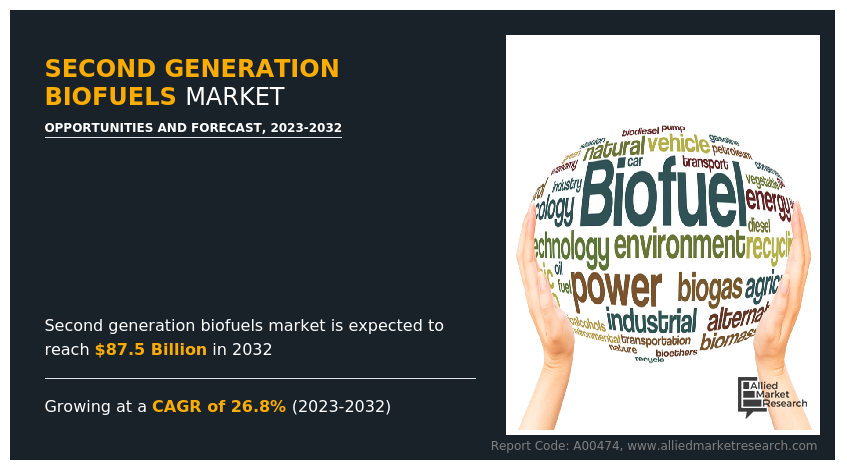
WILMINGTON, DE, UNITED STATES, June 8, 2026 /EINPresswire.com/ -- The Second Generation Biofuels Market is emerging as one of the most promising segments within the global renewable energy industry. Growing concerns regarding energy security, greenhouse gas emissions, and dependence on fossil fuels are encouraging governments and industries to invest in sustainable fuel alternatives. According to industry estimates, the market was valued at $8.2 billion in 2022 and is projected to reach $87.5 billion by 2032, expanding at a remarkable CAGR of 26.8% during the forecast period.— Allied Market Research
Unlike conventional biofuels produced from food crops, second-generation biofuels are manufactured using non-food biomass resources such as agricultural residues, forestry waste, lignocellulosic feedstocks, algae, and dedicated energy crops. This approach reduces competition with food production while maximizing the use of waste materials and underutilized biomass resources.
Download PDF Brochure: https://www.alliedmarketresearch.com/request-sample/586
As nations pursue carbon neutrality goals and cleaner transportation systems, the Second Generation Biofuels Market is attracting significant investments from energy companies, technology providers, and government agencies. Continuous innovation in feedstock processing, conversion technologies, and commercial-scale production facilities is expected to create substantial growth opportunities over the coming decade.
Market Overview of the Second Generation Biofuels Market
The global energy landscape is undergoing a significant transformation as countries seek alternatives to traditional fossil fuels. Within this transition, the Second Generation Biofuels Market is gaining momentum because of its ability to deliver lower carbon emissions while utilizing sustainable feedstocks.
Second-generation biofuels are often referred to as advanced biofuels because they are produced from biomass sources that do not directly compete with food supplies. Agricultural residues, crop stalks, husks, wood waste, municipal solid waste, and algae are increasingly being used to generate renewable fuels.
The market is benefiting from increasing fuel demand across transportation, industrial, and power generation sectors. Governments worldwide are introducing blending mandates, renewable fuel standards, and carbon reduction policies that encourage biofuel adoption. These supportive regulations are accelerating commercialization and encouraging investments in production infrastructure.
The growing focus on circular economy principles is also contributing to market growth. By converting agricultural and industrial waste into valuable fuel products, second-generation biofuels support sustainability objectives while creating additional income opportunities for rural communities and biomass suppliers.
Market Dynamics
The Second Generation Biofuels Market is shaped by a combination of environmental priorities, technological developments, and evolving energy policies. Rising global energy demand continues to place pressure on traditional fuel supplies, creating opportunities for renewable alternatives.
Population growth, urbanization, and industrial expansion are increasing fuel consumption worldwide. At the same time, climate change concerns are forcing governments to reduce reliance on petroleum-based fuels. These factors collectively support the development of advanced biofuel technologies.
Industry participants are investing heavily in research and development to improve conversion efficiency, reduce production costs, and scale up commercial operations. Strategic partnerships among energy companies, biotechnology firms, and research institutions are helping accelerate technology deployment.
However, market participants must also address challenges related to feedstock availability, infrastructure requirements, and production economics. Despite these obstacles, continued policy support and technological progress are expected to maintain strong market momentum.
Market Drivers Accelerating Industry Expansion
Several factors are contributing to the rapid growth of the Second Generation Biofuels Market.
One of the most important drivers is the global push toward decarbonization. Governments are implementing policies aimed at reducing transportation emissions and achieving climate objectives. Advanced biofuels offer an effective pathway for lowering carbon intensity without requiring major modifications to existing fuel distribution networks.
Another significant driver is energy security. Many countries depend heavily on imported crude oil and refined petroleum products. Expanding domestic biofuel production helps diversify energy sources and reduce dependence on international fuel markets.
Technological innovation is also supporting market expansion. Improvements in enzymatic hydrolysis, gasification, fermentation, and biomass conversion technologies are making second-generation biofuels more commercially viable.
The transportation sector remains a major growth catalyst. Airlines, shipping operators, logistics companies, and automotive manufacturers are increasingly exploring low-carbon fuel solutions to meet sustainability targets.
Market Restraints and Industry Challenges
Despite strong growth prospects, the market faces several challenges that may affect adoption rates.
Production costs remain higher than those associated with conventional fossil fuels and some first-generation biofuels. Advanced conversion technologies often require significant capital investment, creating financial barriers for new entrants.
Feedstock collection and logistics also present challenges. Biomass resources are frequently dispersed across large geographic areas, increasing transportation and storage costs.
Technology scalability remains another concern. While numerous pilot projects have demonstrated success, achieving consistent large-scale production remains complex for some advanced biofuel technologies.
In addition, fluctuating crude oil prices can impact market competitiveness. When petroleum prices decline, renewable fuels may face increased pricing pressure in certain regions.
Market Opportunities Creating Long-Term Growth Potential
The market presents significant opportunities for investors, technology developers, and energy producers.
Emerging economies are expected to play a major role in future expansion. Rapid industrialization and increasing transportation demand are creating favorable conditions for renewable fuel adoption.
The aviation sector represents a particularly attractive opportunity. Sustainable aviation fuel production derived from second-generation biomass is receiving strong support from governments and airlines seeking to reduce carbon emissions.
Marine transportation also offers growth potential as shipping companies pursue cleaner fuel alternatives to comply with international environmental regulations.
The integration of waste management and biofuel production systems is another promising area. Municipal waste, agricultural residues, and industrial by-products can serve as valuable feedstocks while helping address waste disposal challenges.
Second Generation Biofuels and Biomass: A Sustainable Production Model
Second generation biofuels and biomass are closely interconnected. Biomass serves as the primary raw material used in advanced biofuel production processes.
Agricultural residues such as wheat straw, corn stover, rice husks, and sugarcane bagasse provide abundant feedstock resources. Forestry residues and dedicated energy crops further expand the available supply base.
Using biomass resources that would otherwise be discarded enhances resource efficiency and reduces environmental impacts. This approach supports circular economy objectives while creating new revenue streams for agricultural producers.
Growing investments in biomass collection networks and preprocessing facilities are expected to strengthen supply chains and improve market competitiveness over the coming years.
First Generation and Second Generation Biofuels: Understanding the Difference
Comparisons between first generation and second generation biofuels are becoming increasingly important as policymakers evaluate sustainable fuel strategies.
First-generation biofuels are typically produced from food crops such as corn, sugarcane, and vegetable oils. While these fuels have contributed to renewable energy adoption, concerns regarding food security and land use have prompted interest in alternative solutions.
Second-generation biofuels address many of these concerns by utilizing non-food biomass sources. This reduces competition with food production and improves overall sustainability performance.
Advanced biofuels also offer greater potential for greenhouse gas reduction, making them attractive for countries pursuing aggressive climate goals.
As technology costs decline and production capacity expands, second-generation fuels are expected to capture a larger share of the global biofuel market.
Buy This Report (414 Pages PDF with Insights, Charts, Tables, and Figures): https://www.alliedmarketresearch.com/second-generation-biofuels-market/purchase-options
Advanced Biofuels Market Gains Momentum Worldwide
The advanced biofuels market is experiencing strong growth due to increasing demand for low-carbon energy solutions.
Advanced biofuels encompass a broad range of renewable fuel technologies designed to achieve higher sustainability standards and improved environmental performance. Second-generation biofuels represent a major component of this expanding market.
Governments across North America, Europe, and Asia-Pacific are supporting advanced fuel development through grants, tax incentives, and renewable fuel mandates. These initiatives are encouraging private-sector investment and accelerating commercialization.
The growing adoption of sustainable transportation fuels is expected to remain a key growth driver throughout the forecast period.
Transportation Biofuel Market Creates Significant Demand
The transportation biofuel market remains the largest application area for second-generation biofuels.
Road transportation continues to consume substantial volumes of liquid fuels worldwide. As governments introduce stricter emissions regulations, renewable fuel blending is becoming increasingly common.
Commercial fleets, public transportation systems, and logistics providers are exploring advanced biofuel solutions to reduce carbon footprints while maintaining operational efficiency.
Heavy-duty vehicles, aviation, and marine transportation are expected to generate additional demand as sustainable fuel adoption expands globally.
Ethanol Biofuel Market Benefits from Advanced Feedstock Technologies
The ethanol biofuel market is undergoing transformation through the adoption of second-generation production technologies.
Traditional ethanol production relies heavily on food-based feedstocks. Advanced ethanol facilities are increasingly utilizing agricultural residues and waste materials to improve sustainability performance.
Cellulosic ethanol production has gained attention because of its ability to convert abundant biomass resources into renewable transportation fuel. Technological improvements continue to enhance production efficiency and commercial viability.
As governments promote renewable fuel standards and emissions reduction initiatives, advanced ethanol production is expected to contribute significantly to market growth.
US Second Generation Bio Fuels Market Shows Strong Potential
The US second generation bio fuels market remains one of the most important regional markets globally.
Supportive federal policies, renewable fuel programs, and significant research investments have positioned the United States as a leader in advanced biofuel development.
The country benefits from abundant biomass resources, established agricultural infrastructure, and strong innovation capabilities. Numerous companies are investing in commercial-scale production facilities and next-generation conversion technologies.
Growing interest in sustainable aviation fuel and renewable diesel is expected to create additional opportunities for industry participants operating within the U.S. market.
Next Generation Biofuel Market Driven by Innovation
The next generation biofuel market is evolving rapidly as new technologies improve efficiency and economic feasibility.
Researchers are developing advanced enzymes, microbial processes, and thermochemical conversion methods that enable higher fuel yields from diverse feedstocks.
Artificial intelligence, automation, and digital monitoring systems are also helping optimize production processes and reduce operating costs.
These innovations are expected to enhance competitiveness and support broader adoption across multiple industries.
Technology Analysis
The Second Generation Biofuels Market utilizes several advanced production technologies.
Biochemical conversion processes involve pretreatment, enzymatic hydrolysis, and fermentation to convert biomass into fuel products. These methods are widely used in cellulosic ethanol production.
Thermochemical technologies include gasification, pyrolysis, and Fischer-Tropsch synthesis. These processes convert biomass into synthetic fuels and bio-oils suitable for transportation and industrial applications.
Thermochemical processes currently account for a significant share of the market due to their versatility and ability to process diverse feedstocks.
Segment Analysis
Based on feedstock, complex lignocellulose remains a leading segment due to its widespread availability and high energy potential. Agricultural residues and forestry waste continue to represent valuable raw material sources.
By type, cellulosic ethanol, biodiesel, and bio-butanol remain major product categories. Cellulosic ethanol is gaining attention because of increasing investments in advanced ethanol production facilities.
From a process perspective, thermochemical technologies continue to dominate due to their efficiency and scalability.
By application, transportation remains the largest segment. Growing demand for cleaner fuels across road, aviation, and marine transportation sectors supports long-term growth prospects.
Regional Analysis
North America accounted for the largest share of the market in 2022. Strong policy support, technological innovation, and significant biomass availability contribute to regional leadership.
Europe continues to promote advanced biofuel adoption through ambitious decarbonization goals and renewable energy regulations. Investments in sustainable transportation infrastructure are supporting market growth.
Asia-Pacific is expected to witness the fastest expansion during the forecast period. Rising energy demand, expanding transportation networks, and government support for renewable fuels are creating favorable conditions for industry development.
LAMEA also presents growth opportunities as countries seek to diversify energy sources and reduce dependence on imported fuels.
Competitive Landscape
The Second Generation Biofuels Market includes several established companies and emerging innovators. Key participants include Algenol Biofuels, Clariant AG, International Flavors & Fragrances Inc., GranBio, Ineos Group, Ørsted A/S, Reliance Industries, and Gevo Inc..
Industry participants are focusing on capacity expansion, strategic partnerships, technology licensing, and research collaborations. Companies are also investing in advanced production facilities to meet anticipated future demand.
Future Outlook
The future of the Second Generation Biofuels Market appears highly promising. Increasing pressure to reduce greenhouse gas emissions, improve energy security, and transition toward sustainable fuels will continue driving investments.
Technological advancements are expected to improve production economics and expand commercialization opportunities. Growing adoption across transportation, aviation, and industrial sectors will further strengthen demand.
As governments introduce more ambitious climate policies and renewable fuel mandates, second-generation biofuels are likely to become a critical component of the global energy transition.
Get a Customized Research Report: https://www.alliedmarketresearch.com/request-for-customization/586
Conclusion
The Second Generation Biofuels Market is positioned for exceptional growth as countries accelerate efforts to achieve energy security, reduce emissions, and diversify fuel sources. The use of non-food biomass, advanced conversion technologies, and sustainable production models is transforming the renewable energy landscape. Increasing demand across the transportation biofuel market, ethanol biofuel market, and advanced biofuels market is expected to create significant opportunities for producers, investors, and technology providers. With supportive government policies, rising environmental awareness, and continuous innovation, the Second Generation Biofuels Market is set to play a pivotal role in the global transition toward a cleaner and more sustainable energy future.
Trending Reports in Energy and Power Industry:
Second Generation Biofuels Market
https://www.alliedmarketresearch.com/second-generation-biofuels-market
Renewable Fuel Market
https://www.alliedmarketresearch.com/renewable-fuel-market-A15981
Europe Biodiesel Market
https://www.alliedmarketresearch.com/europe-biodiesel-market-A323227
Biodiesel Market
https://www.alliedmarketresearch.com/biodiesel-market
Bunker Fuel Market
https://www.alliedmarketresearch.com/bunker-fuel-market
E-Fuel Market
https://www.alliedmarketresearch.com/e-fuel-market-A12837
Solar Fuel Market
https://www.alliedmarketresearch.com/solar-fuel-market-A323311
Retail Fuel Station Market
https://www.alliedmarketresearch.com/retail-fuel-station-market-A290128
Wood Pellet Fuel Market
https://www.alliedmarketresearch.com/wood-pellet-fuel-market
Synthetic Fuel Market
https://www.alliedmarketresearch.com/synthetic-fuel-market-A53653
Jet Fuel Market
https://www.alliedmarketresearch.com/jet-fuel-market-A06883
Bio Jet Fuels Market
https://www.alliedmarketresearch.com/bio-jet-fuel-market
Green Hydrogen Market
https://www.alliedmarketresearch.com/green-hydrogen-market-A11310
Singapore Bunker Fuel Market
https://www.alliedmarketresearch.com/singapore-bunker-fuel-market-A14491
About Us
Allied Market Research (AMR) is a full-service market research and business-consulting wing of Allied Analytics LLP based in Portland, Oregon. Allied Market Research provides global enterprises as well as medium and small businesses with unmatched quality of "Market Research Reports" and "Business Intelligence Solutions." AMR has a targeted view to provide business insights and consulting to assist its clients to make strategic business decisions and achieve sustainable growth in their respective market domain.
Pawan Kumar, the CEO of Allied Market Research, is leading the organization toward providing high-quality data and insights. We are in professional corporate relations with various companies and this helps us in digging out market data that helps us generate accurate research data tables and confirms utmost accuracy in our market forecasting. Each and every data presented in the reports published by us is extracted through primary interviews with top officials from leading companies of domain concerned. Our secondary data procurement methodology includes deep online and offline research and discussion with knowledgeable professionals and analysts in the industry.
David Correa
Allied Market Research
+ + + + + + + + + + + + +1 800-792-5285
email us here
Visit us on social media:
LinkedIn
Facebook
YouTube
X
Legal Disclaimer:
EIN Presswire provides this news content "as is" without warranty of any kind. We do not accept any responsibility or liability for the accuracy, content, images, videos, licenses, completeness, legality, or reliability of the information contained in this article. If you have any complaints or copyright issues related to this article, kindly contact the author above.
